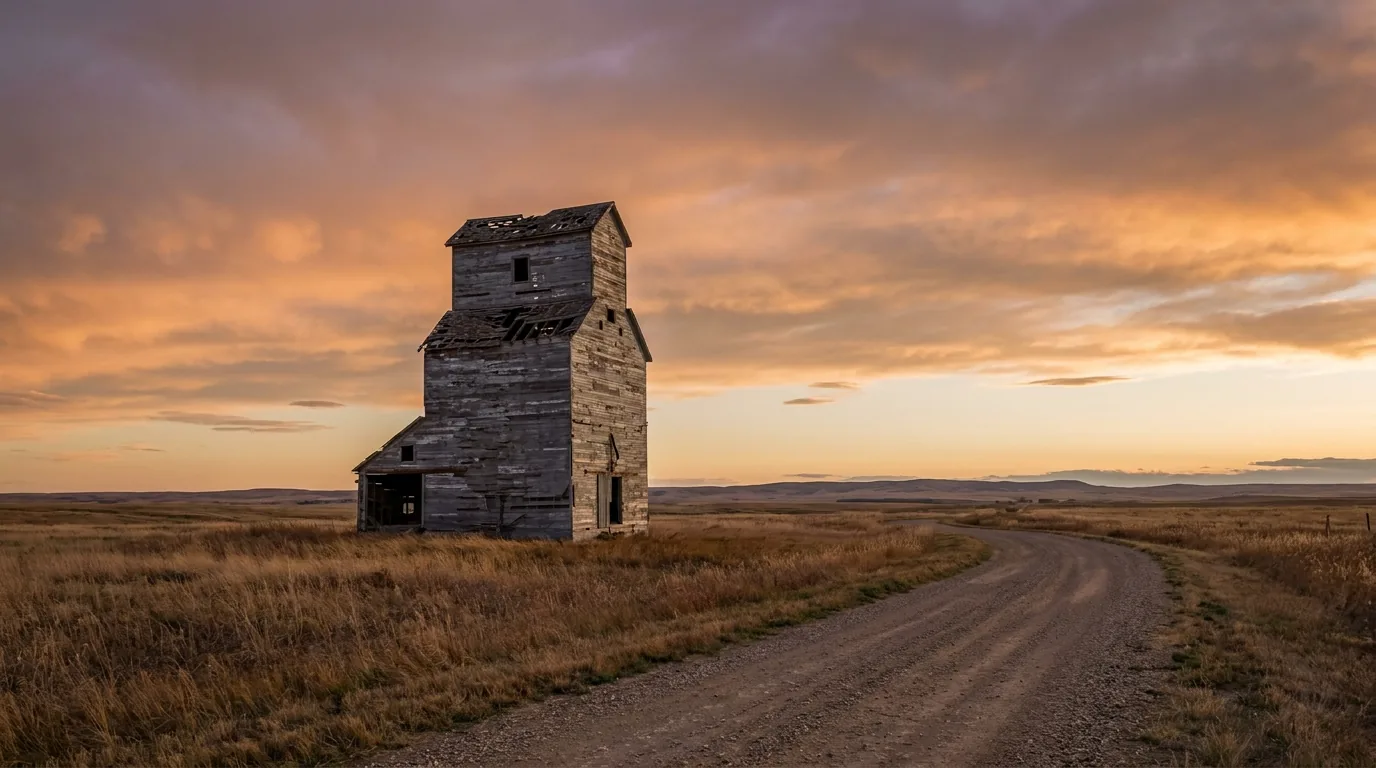
Southern Alberta is quietly one of the great ghost-town landscapes in North America — coal camps the mines walked away from, railway hamlets the branch line forgot, and grain-elevator towns emptied by irrigation that went somewhere else. The good news for the rest of us: you don't need to jump a single fence to see the best of it. This is a road-legal loop through the towns Alberta left behind — a badlands cluster, a lonely prairie one-off, a coal kingdom in the mountains, and a bonus most people never think to chase: the abandoned fire lookouts.
Read This First: The One Rule
Ghost towns bring out the worst in otherwise good people, so let's set the rule that makes this whole trip work — and keeps it legal. Almost everything that survives out here sits on active ranch or farm land. A leaning elevator or a roofless church in a field is somebody's property, not an attraction. The entire loop below is built to be enjoyed from public roads, free public historic sites, paid tours, and public-land trails — nothing here asks you to trespass.
So: if it's fenced, posted, or in a yard, you view it and photograph it from the road. You don't climb elevators or step inside derelict buildings — they're structurally unsound and often private, and a rotten floor doesn't care how careful you are. Take the photo, leave everything where it lies, and shut every gate you're invited through. Do that and Alberta's ghost towns stay open to the next person who comes looking.
The whole ethic in one line: photograph the ghost, don't disturb the grave. Roads and public sites give you 95% of the magic and none of the trouble.
Cluster One — The Badlands Ghosts (Drumheller)
This is the easy win, and the place to start: a tight knot of ghost towns and half-alive hamlets in the coal country of the Red Deer River valley, all within about two hours northeast of Calgary and all strung on paved and good-gravel roads.
- Wayne — the crown jewel. You reach it from Rosedale on a single road that crosses the Rosebud River eleven times on eleven one-lane bridges — a drive that's half the fun. At the end, in a hamlet that once held more than 2,000 people, the 1913 Rosedeer Hotel and its Last Chance Saloon are still open for business. Bullet-scarred walls, a working bar, and coulees closing in on all sides. This one you're welcome to walk into.
- East Coulee & the Atlas Coal Mine — a few minutes downriver, the Atlas Coal Mine National Historic Site preserves the last standing wooden coal tipple in Canada. It's a paid, guided site — the legal, ranger-led way to actually go inside the machinery of a dead industry. Worth the ticket.
- Dorothy — downstream where the valley opens, a roofless wooden grain elevator (its chute silent since 1951) stands with two tiny restored churches — one Catholic, one United — kept up by people who refuse to let the place vanish. All of it reads beautifully from the public road.
Cluster Two — Rowley, The Ghost Town That Fought Back
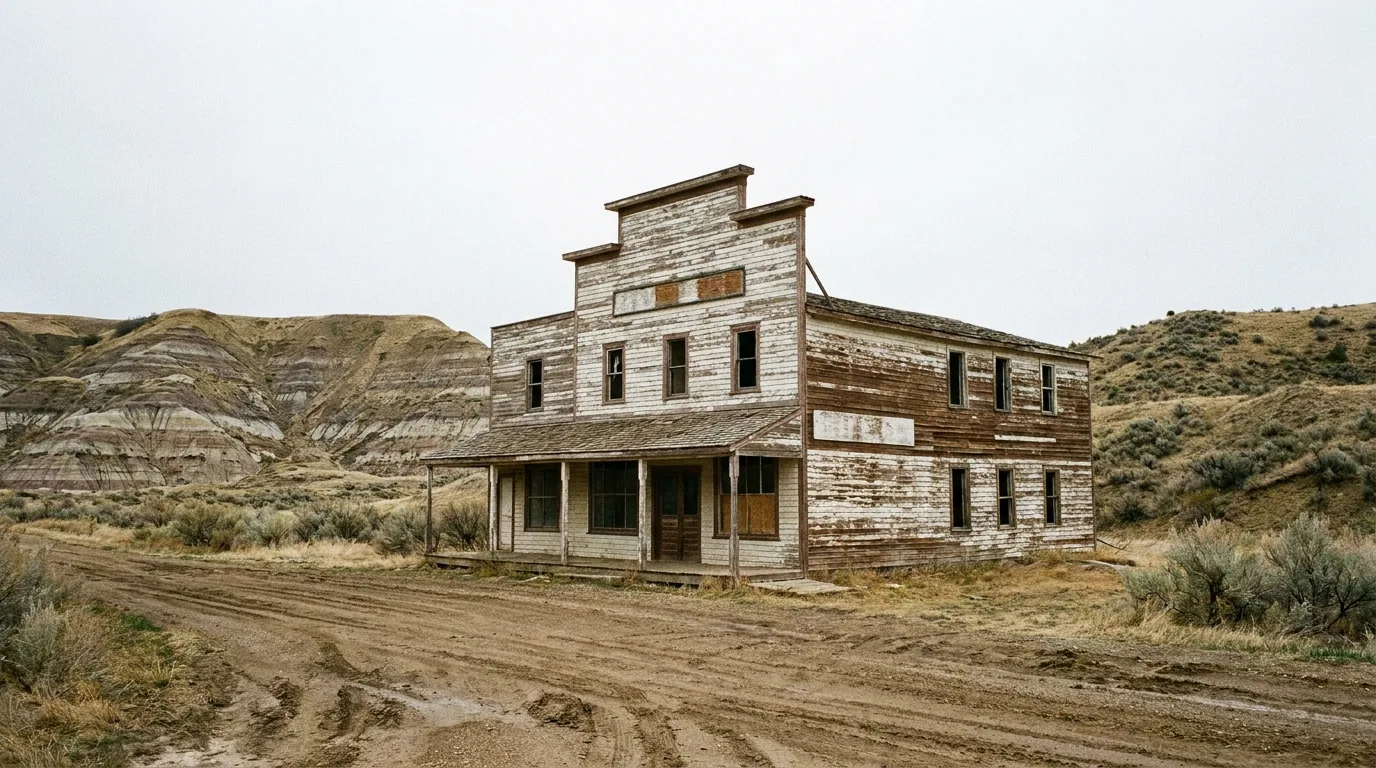
North of Drumheller in Starland County, Rowley is the plot twist of the trip. It should be dead — the railway left, the population fell to about a dozen — but a night of drinking in the 1980s turned into a decision to save the place, and the roughly twelve people who still live there maintain the whole village by hand.
You get a garage, a church, a bank, Sam's Saloon, a community hall, museums in the old railway station and schoolhouse, and three wooden grain elevators — first raised in 1915 and now a designated provincial historic resource under restoration. Hollywood noticed: it's been the backdrop for enough films (Bye Bye Blues among them) to earn the nickname "Rowleywood." Because it's a living community that welcomes visitors, you can wander respectfully during the day — and this is where the local secret comes in below.
The Prairie Secrets (From the People Who Actually Drive These Roads)
Ask the prairie-explorer crowd — the Alberta ghost-town and abandoned-places groups on Facebook, the road-trip threads on Reddit — and they don't send you to the famous stops. They send you to the one-off elevators: a single wooden tower standing alone where a town used to be, in places you've never heard of. Keep these in your back pocket:
- Rowley's Pizza Night — the worst-kept, best secret out here. On the last Saturday of most months (5–9 pm), the village fires up a genuine pizza-and-entertainment night in the hall. A ghost town that feeds you dinner is a rare thing; call ahead to confirm it's running before you build a day around it.
- Sharples — a true fading ghost near Rowley, far quieter and far less photographed. The kind of place the elevator-hunters trade like currency.
- The lone sentinels — single surviving grain elevators at spots like Herronton, Milo and Brant on the prairie south and east of Calgary. No town left to speak of — just one wooden giant, a grid road, and a sky that goes on forever. Golden hour, tripod, done.
These are all roadside viewing. Same rule as everywhere: the field is private, the road is yours.
Cluster Three — The Coal Kingdom of the Crowsnest
Swing southwest, about two and a half to three hours from Calgary on Highway 3, and the ghosts change costume — from prairie wood to mountain stone. The Crowsnest Pass was Alberta's coal engine, and it left behind ruins you're actually encouraged to walk through.
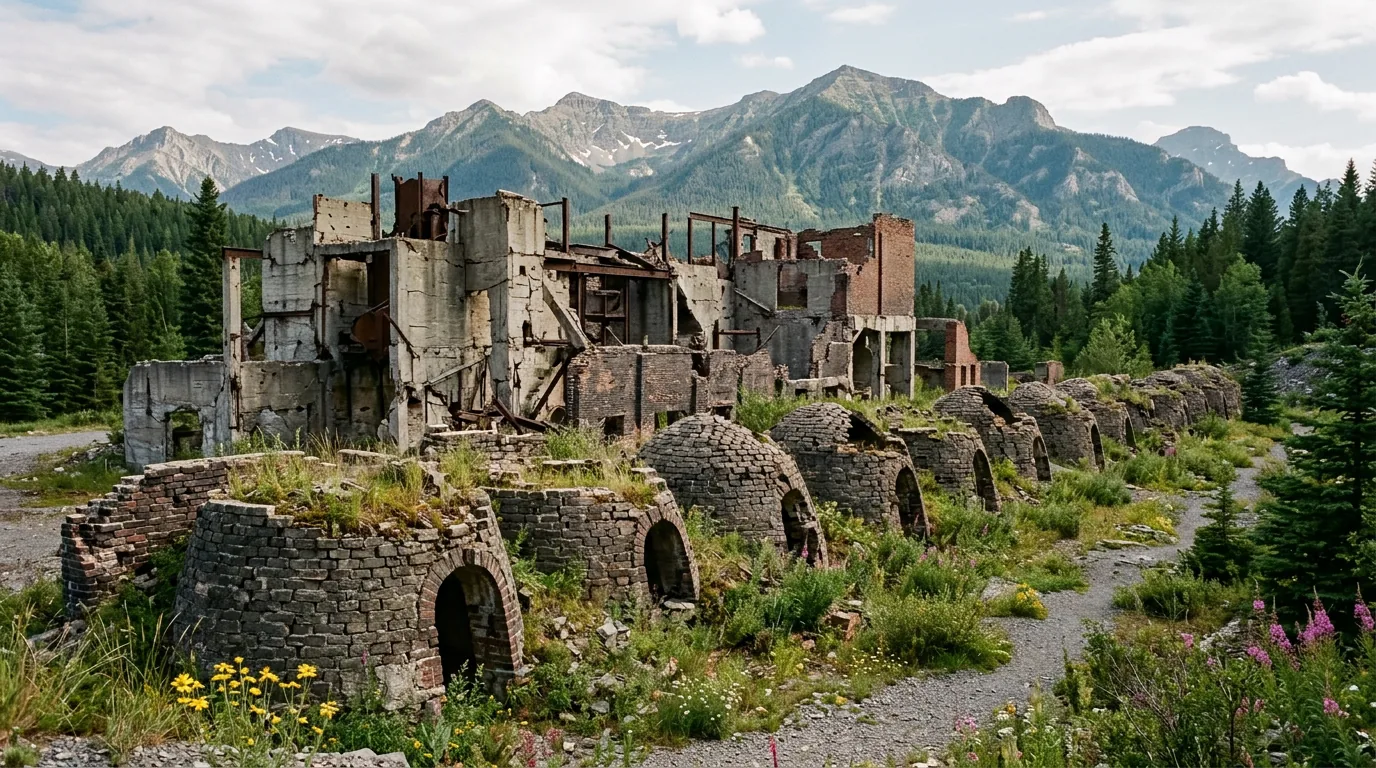
- Leitch Collieries — the standout, and it's free. The only fully Canadian-owned mine of the Pass left behind the concrete skeleton of its processing plant, a weigh office, and a line of coke ovens. Today it's a provincial historic site with interpretive paths, parking, benches and a washroom — self-guided, no charge, with staffed interpretation on select dates in the warm season.
- Lille — the one you earn on foot. A genuine abandoned coal town reached by a public-land trail off the gravel road near the Frank Slide switchback. What's left is honest ruin: depressions, crumbling stone walls, scattered red brick, and a row of coke ovens going back to the grass. A real ghost town, legally on public land, with nobody selling you a ticket.
- The Frank Slide — not a ghost town but the reason for a few, and unmissable. In 1903, 82 million tonnes of Turtle Mountain buried part of Frank in ninety seconds. The interpretive centre and its walking paths let you stand in the boulder field where it happened.
The Bonus Round — The Abandoned Fire Lookouts
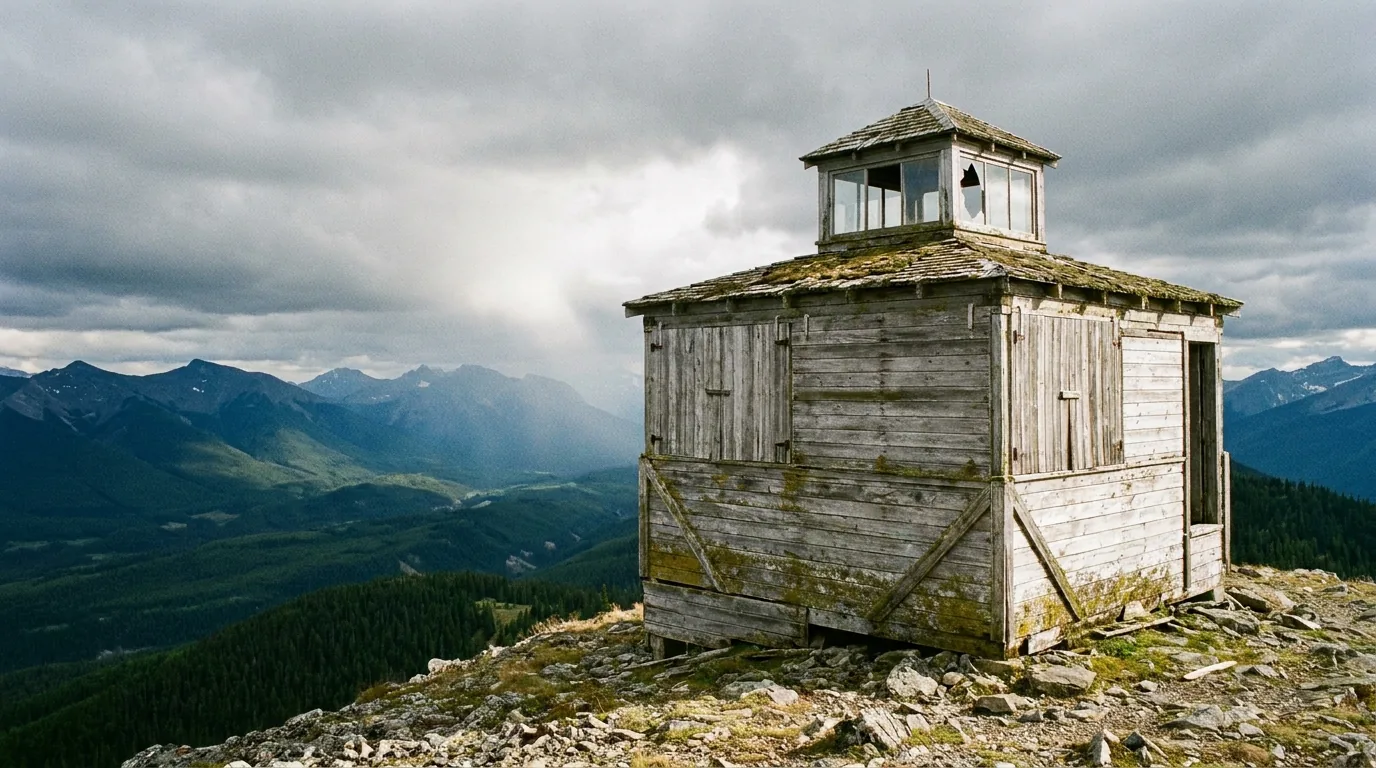
Here's the chase almost nobody puts on their list. For a century Alberta watched its forests from fire lookout towers — lonely cabins on the highest ridge for miles, staffed all summer by one person and a radio. As aircraft and cameras took over, dozens were decommissioned, and their benches, footings and the odd weathered cabin still sit out there on public land, slowly going silver in the wind.
Two honest notes before you go hunting them:
- Not every tower on the map is abandoned. Many are still active, staffed workplaces — someone lives and works up there alone. Those you admire from a distance; you do not walk up to the cabin. Treat an occupied lookout like someone's front porch, because it is.
- The legal, satisfying version is to hike a public-land lookout route for the view and the history. In the Crowsnest, the Ironstone Lookout on Willoughby Ridge is the classic — about 14 km return and 550 m of gain to a windswept bench with the Flathead Range laid out in front of you. It's the same ridgetop solitude the old timers signed up for, minus the trespass.
The Loop At A Glance
You won't do all of this in a day. The badlands cluster is one comfortable day trip from Calgary; the Crowsnest is another; the prairie one-offs and Retlaw fold into a wider southeast wander. Here's the shape of it:
Retlaw — The Lonely One
Save one for the true believers. Retlaw, on the dry prairie east of Vauxhall, was supposed to be a city — pool hall, hotel, railway, church, the works — until the 1920s, when the irrigation that would have made it went to Vauxhall instead. The town simply stopped. What's left is a scatter of foundations and a lone building or two on an enormous, silent plain, viewable from the public road. It's the least "attraction" of everything here, which is exactly why the elevator-hunters love it. (Fun fact for the drive: Retlaw is "Walter" spelled backwards — a CPR official's name, filed in reverse.)
The trade with ghost towns is the opposite of the one with national parks. Nobody's charging you, nobody's reserving you a spot, and nobody's there — that's the entire appeal. Show up with a full tank, your own water for the prairie legs, and the discipline to leave every board and brick exactly where it's been rotting for a hundred years.
Quick Answers
Is it legal to visit these southern Alberta ghost towns?
Every stop in this loop is reachable without trespassing: Wayne, Dorothy and Retlaw are viewable and photographable from public roads; Leitch Collieries and the Frank Slide are free provincial historic sites with parking and paths; Atlas Coal Mine runs paid guided tours; Rowley is a lived-in village that welcomes visitors; and Lille is reached on a public-land trail. The catch is that much of what survives sits on active ranch and farm land — if it's fenced, private, or posted, you view it from the road. Cross no fences, enter no yards.
Which ghost towns are easiest to reach from Calgary?
The Drumheller badlands cluster is the quick win — Wayne, Dorothy, East Coulee's Atlas Coal Mine and Rowley all sit within about a 90-minute to two-hour drive northeast of Calgary and connect on paved and good gravel roads. The Crowsnest Pass coal country (Leitch Collieries, Lille, Frank Slide) is roughly two and a half to three hours southwest. Retlaw is the lonely prairie outlier east of Vauxhall, best folded into a wider southeast loop.
Can I go inside the old buildings and grain elevators?
No — and this is the line that keeps the whole trip legal and safe. Derelict elevators, churches and mine structures are structurally unsound, often privately owned, and entering them is trespassing on top of a real fall-through risk. Photograph the exterior from public ground. The exceptions are the places built to be walked into: the Atlas Coal Mine tipple on a guided tour, the interpretive paths at Leitch Collieries and Frank Slide, and Rowley's museums during open hours.
Are there really abandoned fire lookout towers you can hike to in southern Alberta?
Yes, with a caveat. Alberta decommissioned dozens of its early fire lookouts, and their ridgetop benches, footings and the occasional weathered cabin still sit on public land — the romance is real. But many lookouts on the map today are active, staffed workplaces where someone lives and works alone: those you admire from a distance and never approach the cabin. The honest play is to hike a public-land lookout route like Ironstone on Willoughby Ridge in the Crowsnest for the view and the history, and treat any occupied tower as someone's front porch.
When is the best time to visit southern Alberta's ghost towns?
Late spring through early autumn — roughly May to September. Alberta winters are long and the back roads drift over, but from May on the light on the coulees and prairie is spectacular, especially the first and last hour of the day when a bare elevator throws a shadow half a mile long. Go midweek for empty roads, carry your own water and fuel for the prairie sections, and check that gravel access roads aren't greasy after rain.
Trusted Sources
Details checked against official historic-site and tourism pages July 24, 2026. Hours, tour seasons and Rowley's pizza-night schedule change — call ahead before you build a day around any single stop.
Roll Out With A Plan
Chasing ghosts across the prairie means long gaps between fuel, water and cell signal. Trekkr's campground finder maps where you can legally overnight along the loop — and the Trail Journal keeps the honest routes coming.
Trekkr.life shares field notes from the overlanding community for general information only. Ghost-town remains frequently stand on private ranch and farm land — view and photograph from public roads and designated public sites only, never cross fences or enter posted land, and never go inside derelict structures, which are unsafe and often private. Active fire lookouts are staffed workplaces; keep your distance. Verify site hours, tour seasons, fire bans, road conditions and land status with official sources before you go.