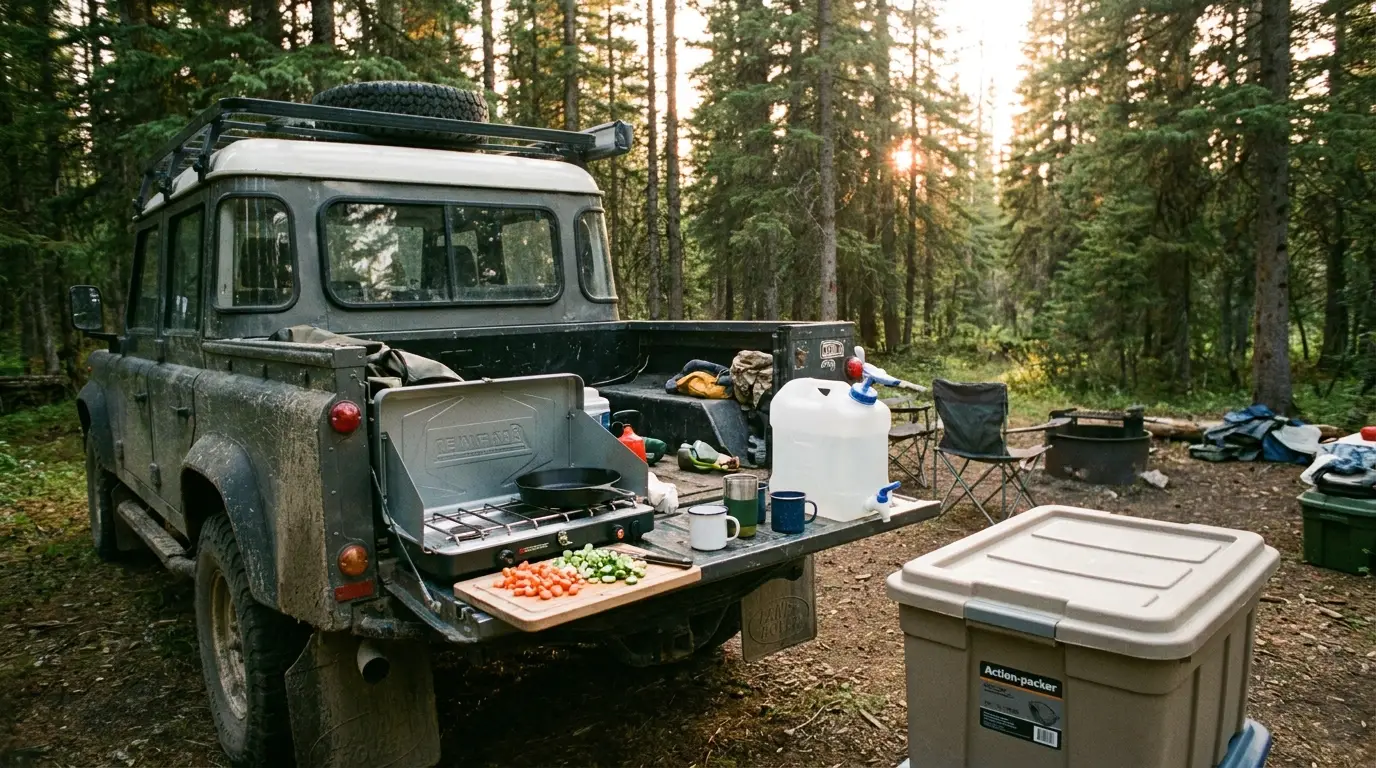
The chuck-box arms race is real, and mostly pointless. Slide-out stainless benches, drawers with soft-close runners, integrated sinks — they look incredible in the parking lot and cost more than a used dirt bike. After five seasons of testing, we keep coming back to a plain setup that fits in one action packer, cost about two hundred bucks, and packs up in the time it takes the fancy rigs to fold their legs out. Here's the whole thing.
The pitch is simple: a camp kitchen should get you fed after a long day on the trail, not become a project you maintain. Every latch, fold, and specialized gadget is one more thing to clean, break, or leave behind. The setup below wins because it's boring — and boring is exactly what gets used, night after night, trip after trip.
Start with the box, not the stove
A rugged action packer is the whole system, not an accessory to it. In transit it's your storage; at camp it's your prep surface; by the fire it's your seat. Everything else lives inside it. Buy the size you'll actually lift when it's full — not the biggest one on the shelf — because a tote you can't move solo defeats the entire point. One box, one trip from the truck, and your kitchen is standing.
What actually goes in the box
Here's the entire loadout. Nothing here is exotic, most of it you may already own, and every piece earns its spot by doing more than one job.
A two-burner is plenty
A reliable two-burner propane stove cooks for four without drama. You do not need a built-in griddle-grill-oven combo you'll clean twice a year and curse every other time. Two burners means one pan working while a pot of water heats — which, as you'll see, is the secret to the fast cleanup. Simplicity is what gets used; complexity is what stays home in the garage.
Cast iron does the work of five pans
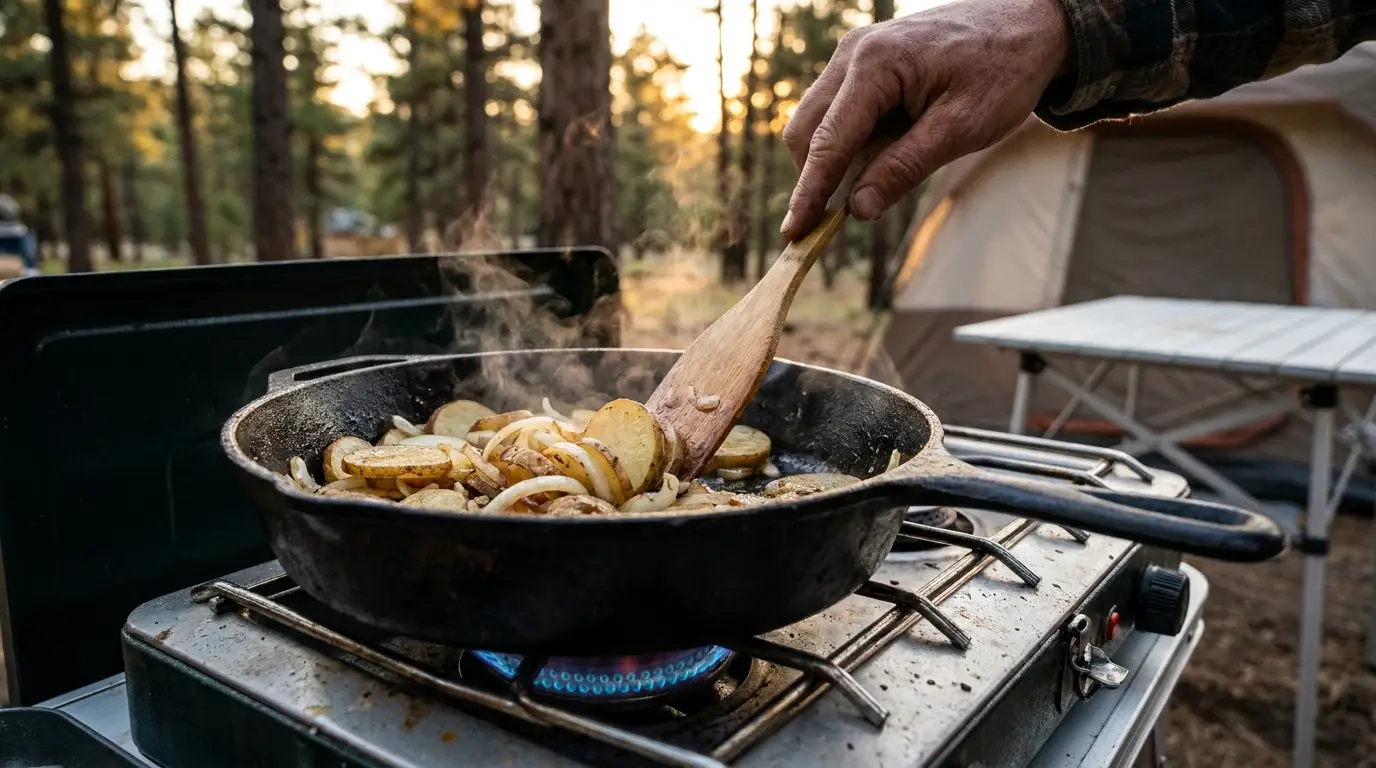
One well-seasoned cast iron pan is your griddle, your oven, your searing station, and your bacon-and-eggs in the morning. It shrugs off a camp stove's uneven heat, it'll outlive your rig, and it cleans with hot water and a scraper — no soap, no scrubbing off non-stick coating you've flaked into dinner. Pair it with a proper cutting board, because the flimsy folding ones ruin prep and slide right off the tailgate.
The ten-minute cleanup trick
Cleanup is where cheap systems bury you and where this one shines. The whole routine runs off two collapsible bins and the second burner, and it's done before the fire burns down.
- Heat water while you eat. Put a pot on the second burner the moment dinner comes off — hot water is 90% of fast dishes.
- Two bins: wash and rinse. Collapsible ones store flat and set up in seconds. Scrape plates into the fire or trash first so the water stays usable.
- Cast iron gets hot water and a scraper — no soap. Dry it on the warm stove and wipe a film of oil on before it goes away.
- Everything nests back wet. Pack it into the packer damp and let it air-dry on the drive home; don't stand around towel-drying in the dark.
- One rag, one scraper beat a whole caddy of single-purpose gadgets. Fewer things to lose, fewer things to clean.
The best camp kitchen is the one you'll actually set up after a long day on the trail. Every extra latch and fold is one more reason to skip cooking and eat cold beans in the dark — simple is what keeps you fed.
Why simple beats the $2,000 chuck box
It's not just about the money, though the money is real. The expensive systems lose on the things that actually matter in the field: weight, cleanup time, and the number of ways they can fail two hours from town. Here's the honest comparison after five seasons of running both.
Quick Answers
What is the most important part of a budget camp kitchen?
A rugged action packer is the core of the system. It stores everything in transit, doubles as a prep surface and a seat at camp, and keeps the whole kitchen in one liftable box.
Do I need more than a two-burner stove for camp cooking?
No. A reliable two-burner propane stove cooks for a group of four without trouble. Elaborate griddle and oven combos add weight and cleaning time you rarely use.
How do I clean up quickly at camp?
Use two collapsible bins for wash and rinse, heat water on the stove while you eat, nest everything back into the packer wet, and let it dry on the drive home.
What cookware works best for camp?
A single cast iron pan covers most jobs — it serves as a griddle, an oven, and a searing station — and a proper cutting board makes prep far easier than flimsy folding ones.
How much does a good camp kitchen cost?
A complete, durable setup can be built for around two hundred dollars using an action packer, a two-burner stove, collapsible bins, and a cast iron pan.
Trusted Sources
Field-tested by the Trekkr community. Cook clean, store food from wildlife, and check fire bans before you light a stove.
Your Rig Belongs on This Page
Drop your best shots and the story of your build. Every week we feature community rigs — free, always.
Trekkr.life shares field notes from the overlanding community for general information only. Cook and store food safely, keep a clean camp in wildlife country, and always check current fire bans and regulations before using an open flame. Gear opinions are our own and never sponsored.