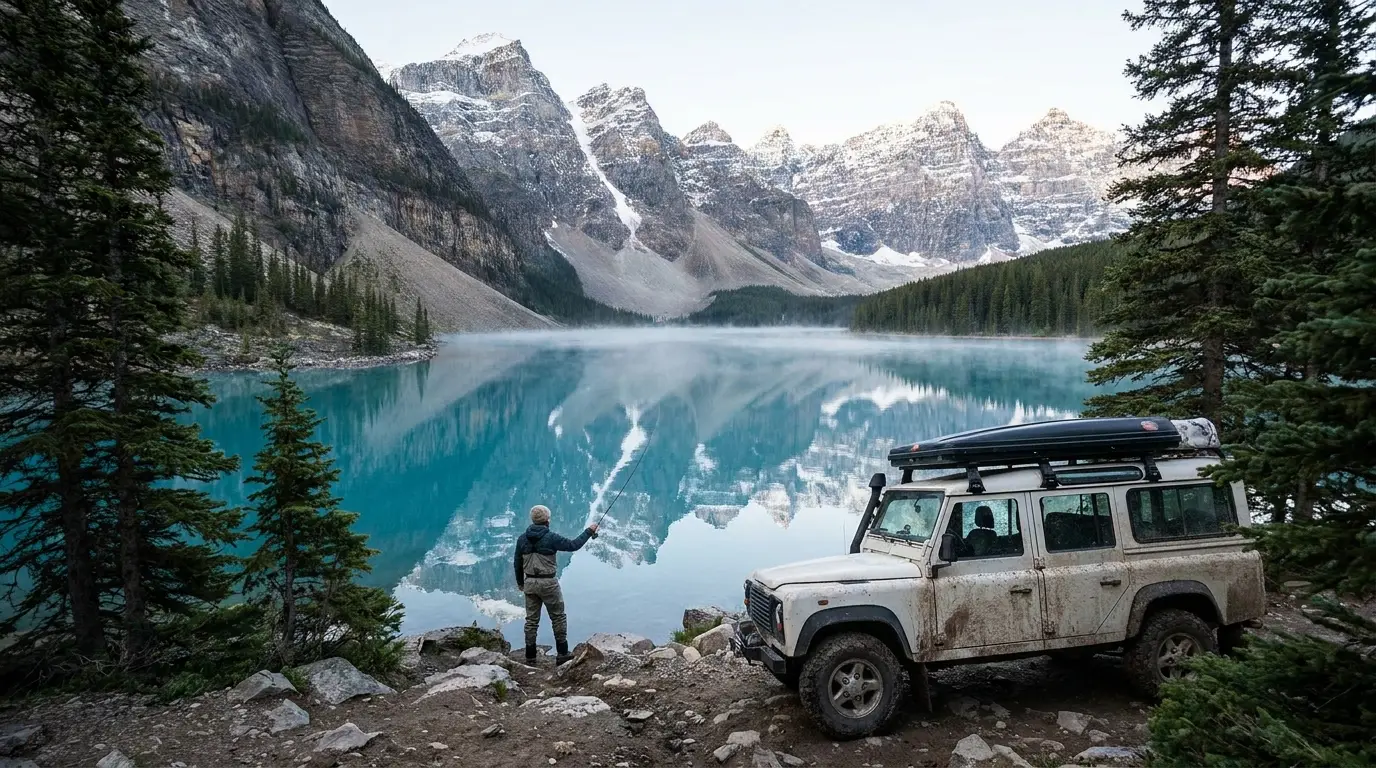
Alpine lakes are the payoff at the end of a good forest road, and the fishing is often almost unfairly simple — cold, clear water and trout that don't see many lures. You don't need a boat, a guide, or a wall of tackle. A packable rod, the right handful of lures, and a rig that gets you to the trailhead is ninety percent of it. Here's the entire starter kit, plus how to read the water once you're standing on the shore.
The whole appeal of rig-based alpine fishing is how little it asks of you. The vehicle does the hard part — getting you and a small kit to a lake most people never bother hiking to. Once you're there, simplicity wins: a light rod, a few proven lures, and a bit of patience beat a tackle box you can barely close. But before any of that, one thing is genuinely non-negotiable.
Get your license first — and read the water's rules
In Alberta you need a valid sportfishing license, and you have to follow the regulations for the specific waterbody you're fishing. Some alpine lakes are catch-and-release only, some ban bait, and some are closed seasonally to protect spawning fish. None of that is optional, the fines aren't small, and the rules exist to keep these fragile high-country fisheries alive for the next rig up the road. Read the regs for your lake before you make a single cast — they're free and take two minutes.
The starter kit that fits behind the seat
Here's the entire loadout. It weighs almost nothing, tucks behind a seat, and covers the vast majority of alpine days without a single gap you'll actually notice.
The rod: packable and honest
A four-piece travel spinning rod in a light or ultralight action fits behind the seat and handles alpine trout all day. Pair it with a small reel and four-to-six-pound line. You're not fighting marlin up here — finesse out-fishes power every time, and a light rod turns a modest little trout into a genuinely fun fight.
Five lures that earn their spot
You can overthink lures forever. Don't. A tiny box with five categories covers almost everything an alpine lake throws at you.
- Small spoons — the alpine workhorse; cast far, sink, and wobble on a slow retrieve.
- A couple of spinners in one natural and one bright color for different light and water clarity.
- A jig or two for when the fish have gone deep in the midday sun.
- A small crankbait to cover water fast and find where the fish are holding.
- Barbless everything if you're releasing — it's often required anyway, and it's far gentler on the fish.
Timing and reading the water
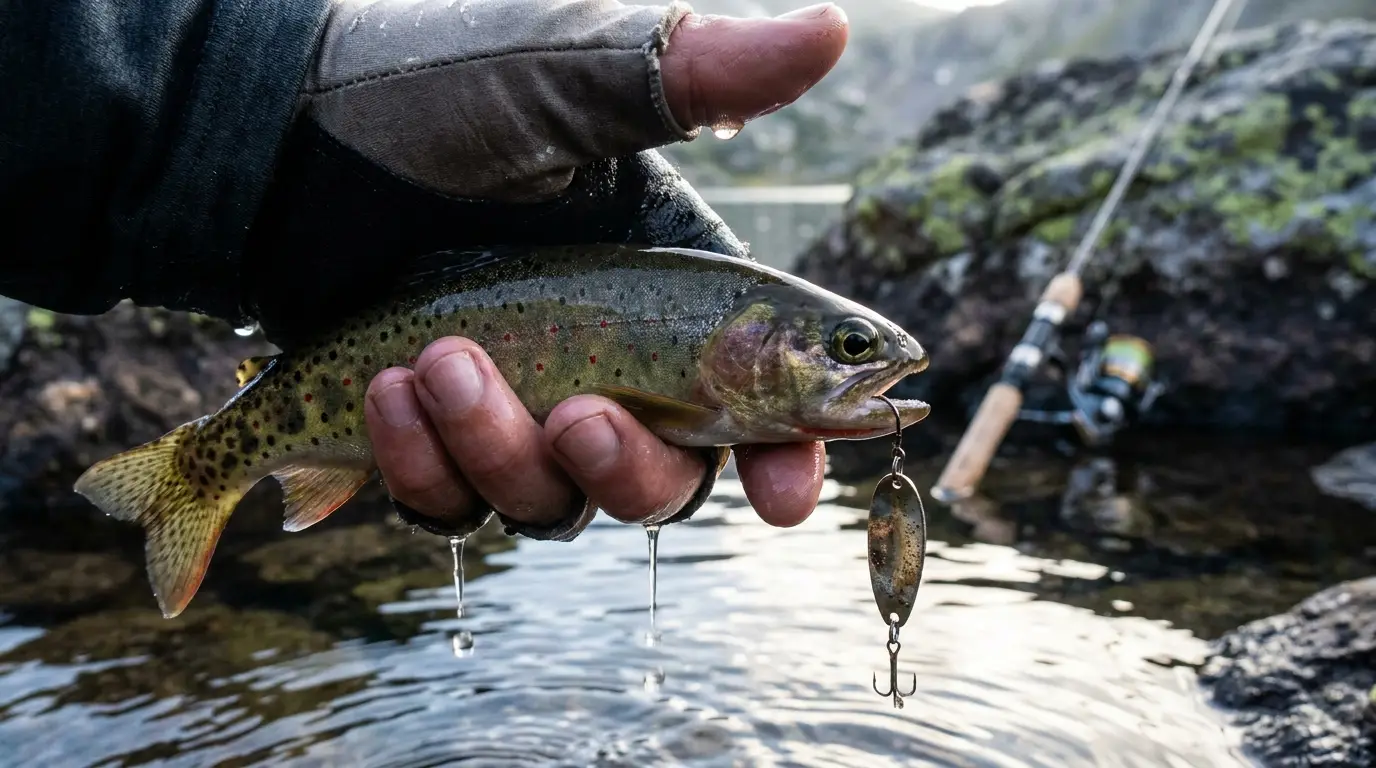
Two things decide most alpine days: when you fish and where you cast. Get both roughly right and the lake does the rest. First and last light are prime — the low sun brings fish up into the shallows to feed. Bright midday sun pushes them deep and slows everything down, so that's the time to hike, eat, or nap and save your energy for the evening bite.
As for where, cold moving water and structure concentrate trout even when the open flats look dead. The diagram below maps the spots worth your first casts.
Pack out every scrap of line and packaging. Alpine lakes recover slowly, and a tangle of monofilament in a shallow bay is a hazard for birds and fish for years. Leave the shoreline cleaner than the last rig did.
Quick Answers
Do I need a license to fish alpine lakes in Alberta?
Yes. A valid Alberta sportfishing license is required, and you must follow the specific regulations for each waterbody, which may include catch-and-release, bait bans, or seasonal closures.
What kind of rod is best for backcountry alpine fishing?
A four-piece packable travel spinning rod in a light or ultralight action is ideal. It fits behind a vehicle seat and handles alpine trout well when paired with a small reel and light line.
What lures should I bring for alpine lake trout?
A small selection covers most days: small spoons, a couple of spinners in natural and bright colors, a jig or two for deeper fish, and a small crankbait. Use barbless hooks if you are releasing.
When is the best time to fish an alpine lake?
First and last light are the prime bite windows. Bright midday sun tends to push trout deeper and slows the bite considerably.
Where do trout hold in an alpine lake?
Focus on inlets, outlets, and drop-offs. Cold moving water and structure concentrate trout even when the open flats appear empty.
Trusted Sources
Field-tested by the Trekkr community. Buy your license, learn the waterbody's rules, and handle wild fish wet and fast.
Your Rig Belongs on This Page
Drop your best shots and the story of your build. Every week we feature community rigs — free, always.
Trekkr.life shares field notes from the overlanding community for general information only. Always buy a valid license and follow the current regulations for the specific waterbody, practice careful catch-and-release, and check advisories and fire bans before you go. Gear opinions are our own and never sponsored.