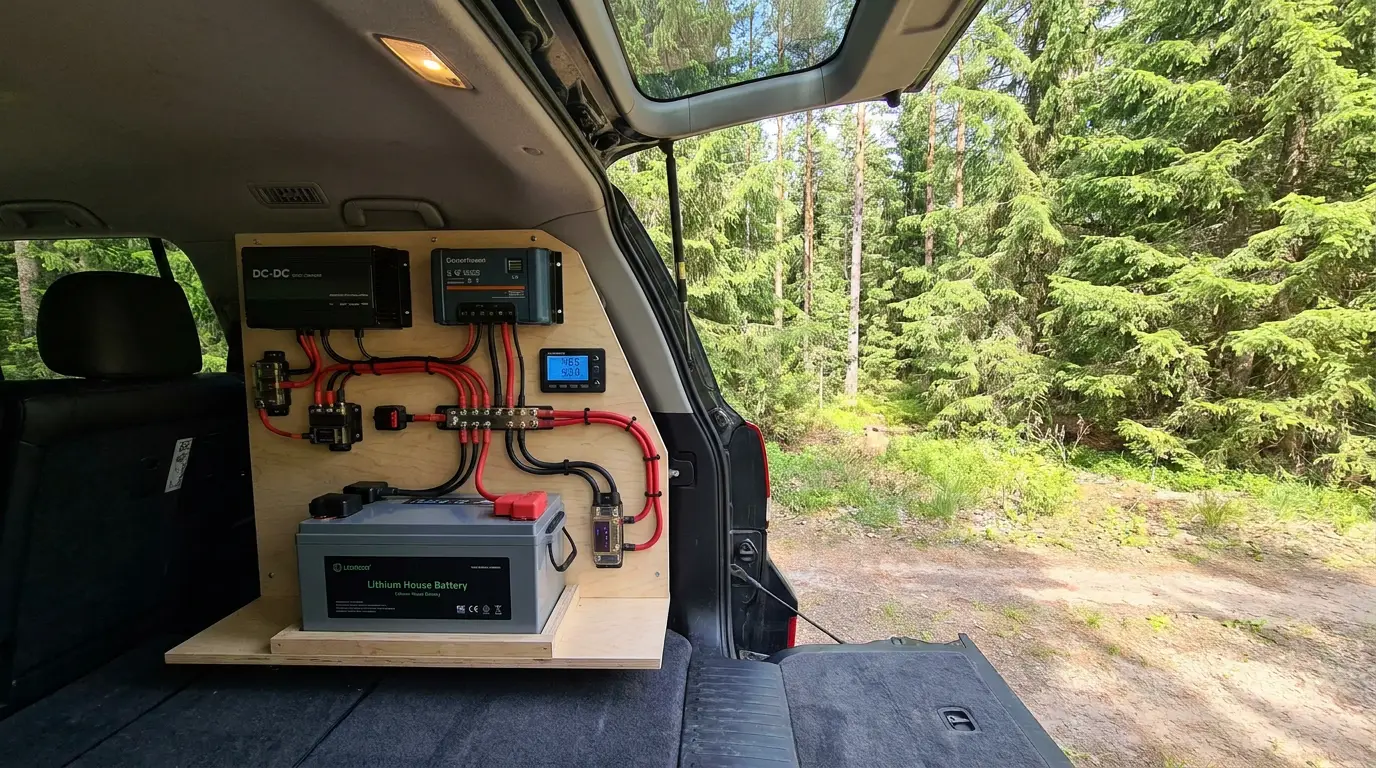
A second battery is the upgrade that unlocks the fridge, the lights, and the quiet confidence that you'll still start in the morning. The wiring diagrams online make it look like a physics exam — busbars, isolators, DC-DC this, LiFePO4 that. It isn't that complicated. Strip away the jargon and the whole thing comes down to a handful of plain-English decisions. Here's the honest version, minus the electrician-speak.
Why a second battery at all
The whole point is to run your accessories — fridge, lights, chargers, that inverter for the laptop — off a separate house battery, so you never wake up to a truck that won't turn over. One battery tries to do both jobs and does both of them badly: run the fridge overnight on your starting battery and you'll be reaching for jumper cables at dawn. Two batteries, wired right, keep your starting power sacred while the house battery takes the abuse.
The two boxes and how they connect
Here's the entire system in one picture. The alternator charges both batteries; a charging device in the middle decides how the house battery gets fed; and fuses sit close to every battery terminal. That's it — everything else is detail.
Isolator vs DC-DC charger
This is the middle box, and it's the decision most people agonize over. It's simpler than it looks.
- A voltage-sensitive relay (isolator) is cheap and simple: it links the two batteries once the engine is running and separates them when it stops. It works, but it dumps raw alternator voltage at the house battery and won't fully or correctly charge a modern one.
- A DC-DC charger costs more but charges the house battery properly and safely, in the right stages, regardless of what the alternator is doing. It's essential if you run lithium, and it's the right answer for almost every build today.
If you're buying new and running a fridge, get the DC-DC charger and never think about it again. The isolator is a budget stopgap, not a destination.
Lithium vs AGM: the honest trade-off
The battery chemistry debate gets heated online, but the practical differences are simple and worth seeing side by side.
Put plainly: AGM is cheaper up front, heavier, and you can only safely use about half its rated capacity. Lithium (LiFePO4) costs more, weighs far less, and gives you roughly three times the usable capacity for the same rating — but it needs a proper DC-DC charger and some care in extreme cold, where charging a frozen lithium battery can damage it. Over a few seasons, lithium usually wins on weight and usable power, which is why most new builds go that way.
Do this part right or don't bother
Everything above is preference. This part isn't. A dual-battery system moves serious current, and the failure mode isn't a dead fridge — it's a fire, on a vehicle that vibrates over washboard for hours.
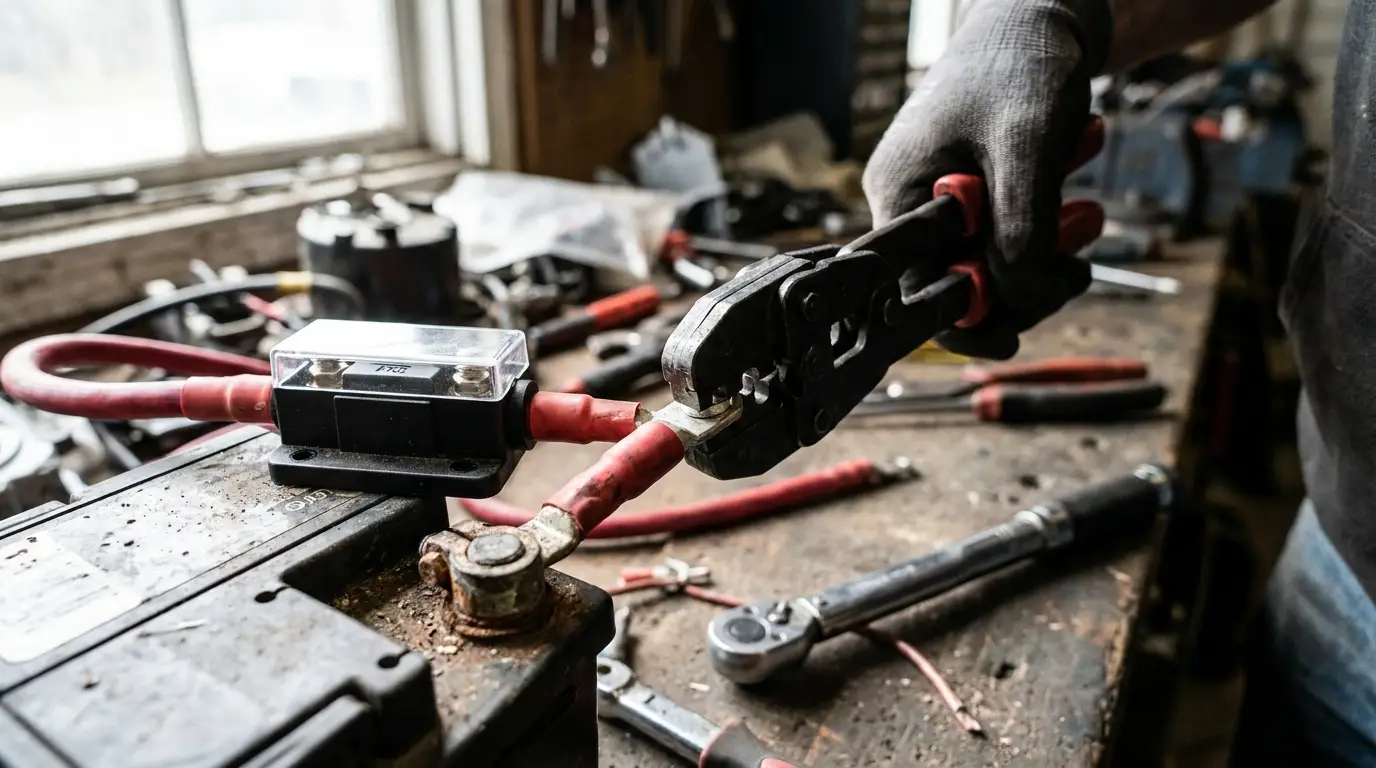
- Fuse everything close to the battery. A fuse within a few inches of each battery terminal protects the whole run. Unfused wire is a fire waiting for a bump.
- Size your wire to the run, not to whatever's in the parts bin. Undersized cable overheats; the charger's manual tells you the gauge.
- Torque and secure every terminal, and add abrasion protection where wires pass through metal. Vibration loosens connections and chafes insulation.
- If you're unsure, have the high-current connections checked. This is the one build where a quiet mistake starts a fire two hours from the nearest town.
The single most important rule: protect your starting battery above all. Every choice here — the isolator or charger, lithium or AGM — exists so that no matter how flat your fridge runs the house battery, the truck still turns over in the morning.
Quick Answers
Why do I need a dual battery setup for overlanding?
A second house battery lets you run accessories like a fridge, lights, and chargers without draining your starting battery, so your vehicle reliably starts even after a night of use.
What is the difference between an isolator and a DC-DC charger?
A voltage-sensitive relay or isolator simply links the batteries while the engine runs and is cheap but does not fully charge modern batteries. A DC-DC charger costs more but charges the house battery correctly and is essential for lithium.
Is lithium or AGM better for a dual battery build?
AGM is cheaper up front but heavier and only about half its capacity is usable. Lithium (LiFePO4) costs more, weighs less, and gives roughly three times the usable capacity, though it needs a proper DC-DC charger and care in extreme cold.
Do I need to fuse a dual battery system?
Yes. Every high-current wire should be fused close to the battery. Unfused wiring is a serious fire risk, especially on a vehicle that vibrates over rough terrain.
Can I install a dual battery system myself?
Many people do, but the high-current connections must be sized and fused correctly. If you are unsure, have those connections checked, because a mistake here can start a fire.
Trusted Sources
Field-tested by the Trekkr community. High-current DC wiring is unforgiving — fuse everything and get it checked if you're unsure.
Your Rig Belongs on This Page
Drop your best shots and the story of your build. Every week we feature community rigs — free, always.
Trekkr.life shares field notes from the overlanding community for general information only. High-current electrical work carries a real risk of fire and injury — follow your components' manuals, fuse and size wiring correctly, and consult a qualified installer if you are unsure. Gear opinions are our own and never sponsored.