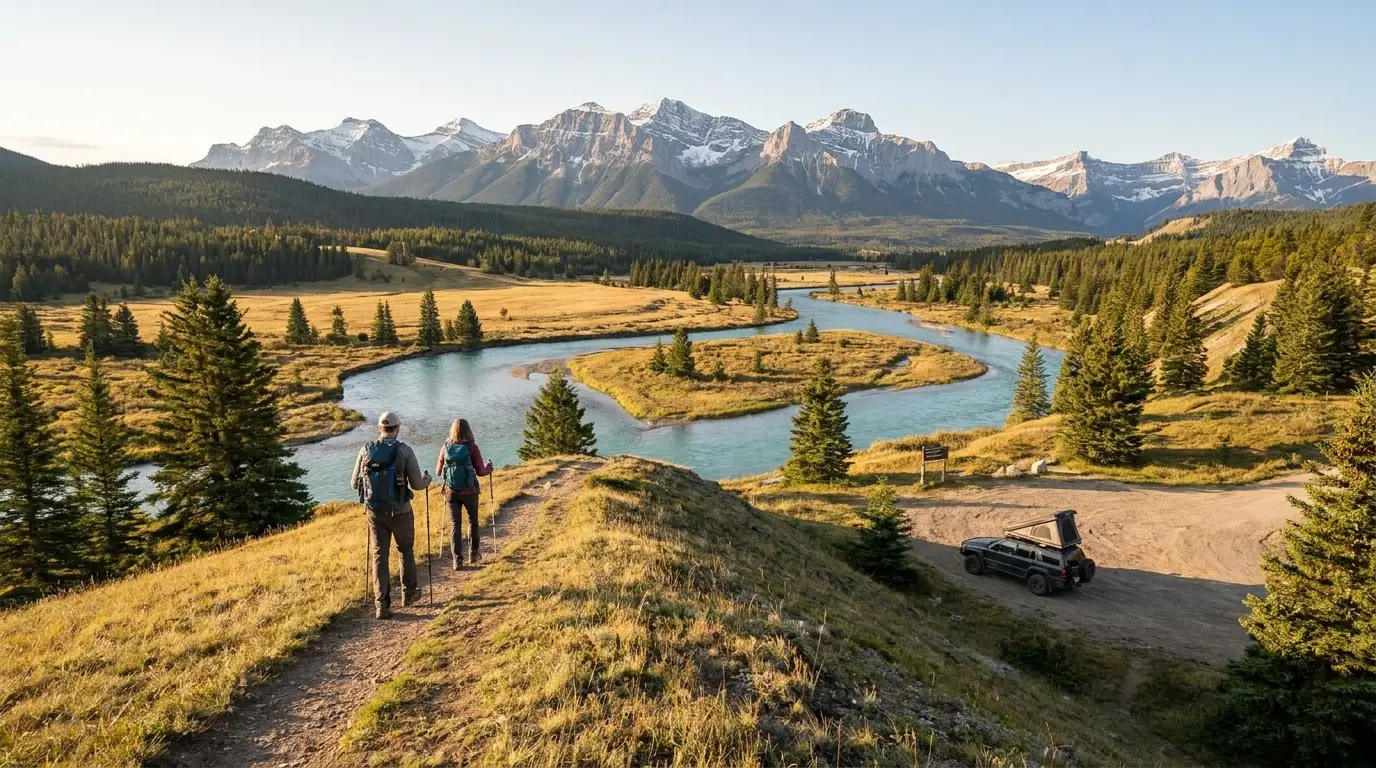
The David Thompson Highway corridor gets overshadowed by its flashier neighbours, which is exactly why it's so good. A handful of trailheads here sit a stone's throw from great dispersed camping and stay quiet even in peak summer, while the marquee parks an hour west are shoulder-to-shoulder. Here's where to point your boots — and the backcountry kit that keeps a quiet trail from turning into a bad story.
This stretch of Highway 11 runs between Nordegg and the Icefields Parkway, threading past Abraham Lake and the Kootenay Plains. It's close enough to reach from Edmonton or Calgary in a morning, but far enough off the marquee-park circuit that the trails stay yours. The four below range from a family-friendly ridge to a full valley day, so there's a match for whoever's in the passenger seat.
Why this corridor stays quiet
It comes down to geography and marketing. The corridor sits far enough from the big-name national parks that day-trippers skip it, and its trailheads rarely show up on the top-ten lists that funnel crowds elsewhere. Camp nearby the night before and you'll have most of these to yourself at first light — which, in the Rockies in July, feels like a genuine cheat code.
The four to start with
Think of these as a difficulty ladder. Pick the rung that matches your group and the weather, and save the big valley day for when everyone's warmed up.
A short ridge walk with a big payoff
The family-friendly option: a short climb onto an open ridge with a huge view over Abraham Lake and the front ranges for modest effort. It's the one to bring first-timers on, and the one that sells them on doing the harder three.
A canyon-and-falls route
A short, interesting walk to a tight canyon and falls that's best in the morning light before the sun flattens the gorge. Low effort, high reward, and usually empty if you're there early.
A meadow approach into the peaks
A moderate route that opens onto alpine meadows and peak views without a summit slog. This is the sweet spot for a lot of hikers — real high country, no scrambling required. Stay on the trail through the meadows; the alpine soil here takes decades to recover from a shortcut.
A longer valley trail
The full day: a longer valley route for when you want to actually earn your dinner. More distance, more solitude, and the kind of quiet that's getting hard to find in the busy parks. Start early and watch the weather.
Come prepared — this is real backcountry
The trails are quiet, but "quiet" and "safe" aren't the same word. Cell service is spotty to nonexistent, the weather flips fast at elevation, and this is grizzly country. The kit that matters is the stuff that works when your phone doesn't.
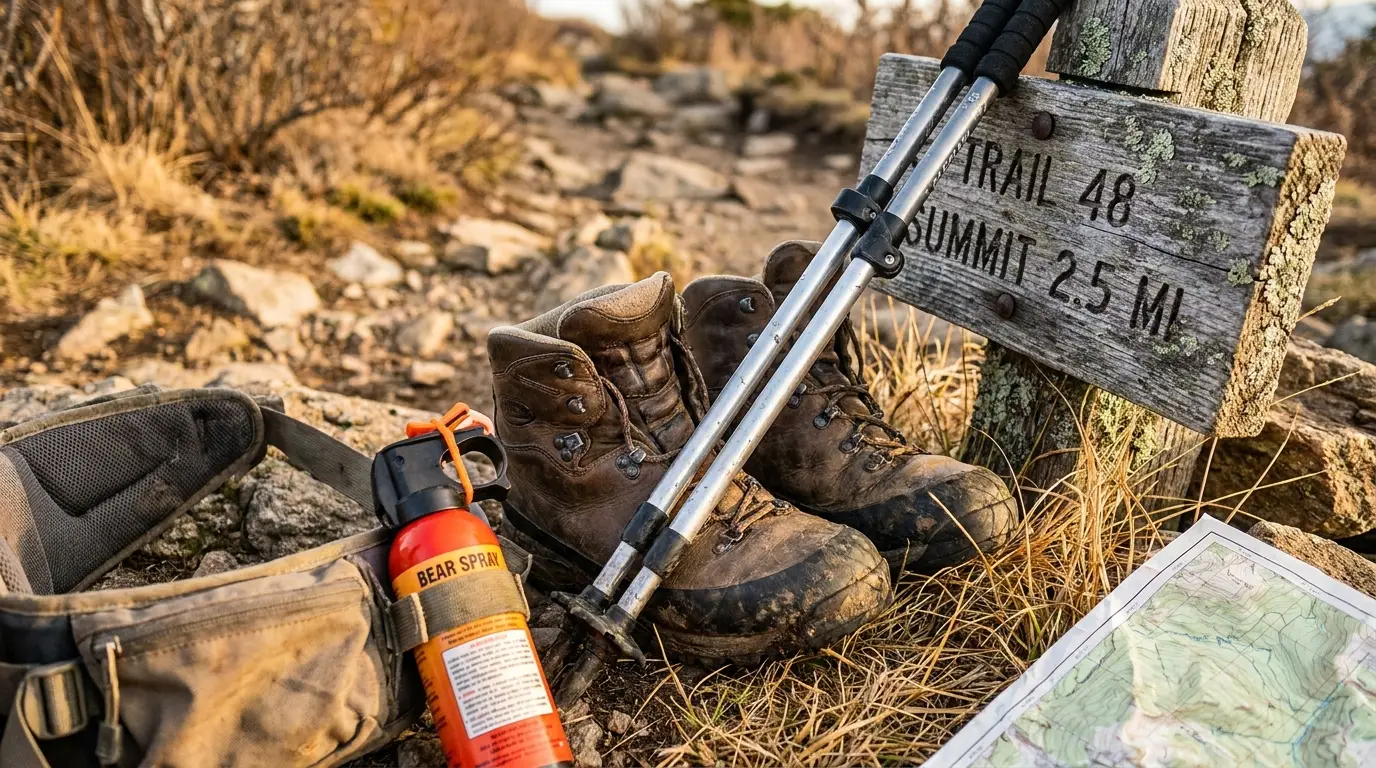
None of it is exotic, and most of it lives in the pack full-time once you've done a few of these. The habits matter as much as the gear:
- Carry bear spray where you can reach it — hip belt or chest, not buried in the pack — and know how to deploy it. Make noise on blind corners and in dense brush so you never surprise a bear.
- Bring a paper map and tell someone your plan. Cell coverage is unreliable to nonexistent; a satellite messenger is worth it on the longer routes.
- Pack at least three litres of water per person, more on hot days or the valley route, since reliable sources along the trail are limited.
- Start early. Afternoon thunderstorms build fast over the front ranges — be off exposed ridges before they hit.
- Stay on the trail and pack out everything, including organic scraps. "It's just an apple core" still draws wildlife to the path.
Start early, carry bear spray on your hip, and leave a plan with someone who'll notice if you're late. These trails are quiet partly because the people who hike them respect the country — that's the whole formula, and it's what keeps them worth returning to.
Quick Answers
Are the David Thompson Highway hikes suitable for beginners?
Some are. The corridor offers a short ridge walk with a big view for modest effort, while longer valley routes suit hikers who want more of a challenge. Choose the trail that matches your experience.
Is there cell service on these trails?
Cell service is spotty to nonexistent along much of the David Thompson corridor. Carry a paper map, tell someone your plan, and consider a satellite messenger for longer routes.
Do I need bear spray on the David Thompson Highway hikes?
Yes. This is grizzly country. Carry bear spray, know how to deploy it, and make noise on blind corners and in dense brush to avoid surprising a bear.
Why are these trails less crowded than nearby parks?
The corridor sits far enough from the marquee national parks that day-trippers skip it, and its trailheads rarely appear on popular top-ten lists, so they stay quiet even in peak summer.
How much water should I bring on these day hikes?
Carry at least three liters per person as a minimum, and more on warm days or longer valley routes, since reliable water sources along the trail can be limited.
Trusted Sources
Field-tested by the Trekkr community. Trail conditions change — check advisories, carry bear spray, and start early.
Your Rig Belongs on This Page
Drop your best shots and the story of your build. Every week we feature community rigs — free, always.
Trekkr.life shares field notes from the overlanding community for general information only. Backcountry travel carries real risk — verify routes, weather, and wildlife advisories with official sources, carry and know how to use bear spray, and turn back when conditions demand it. Gear opinions are our own and never sponsored.