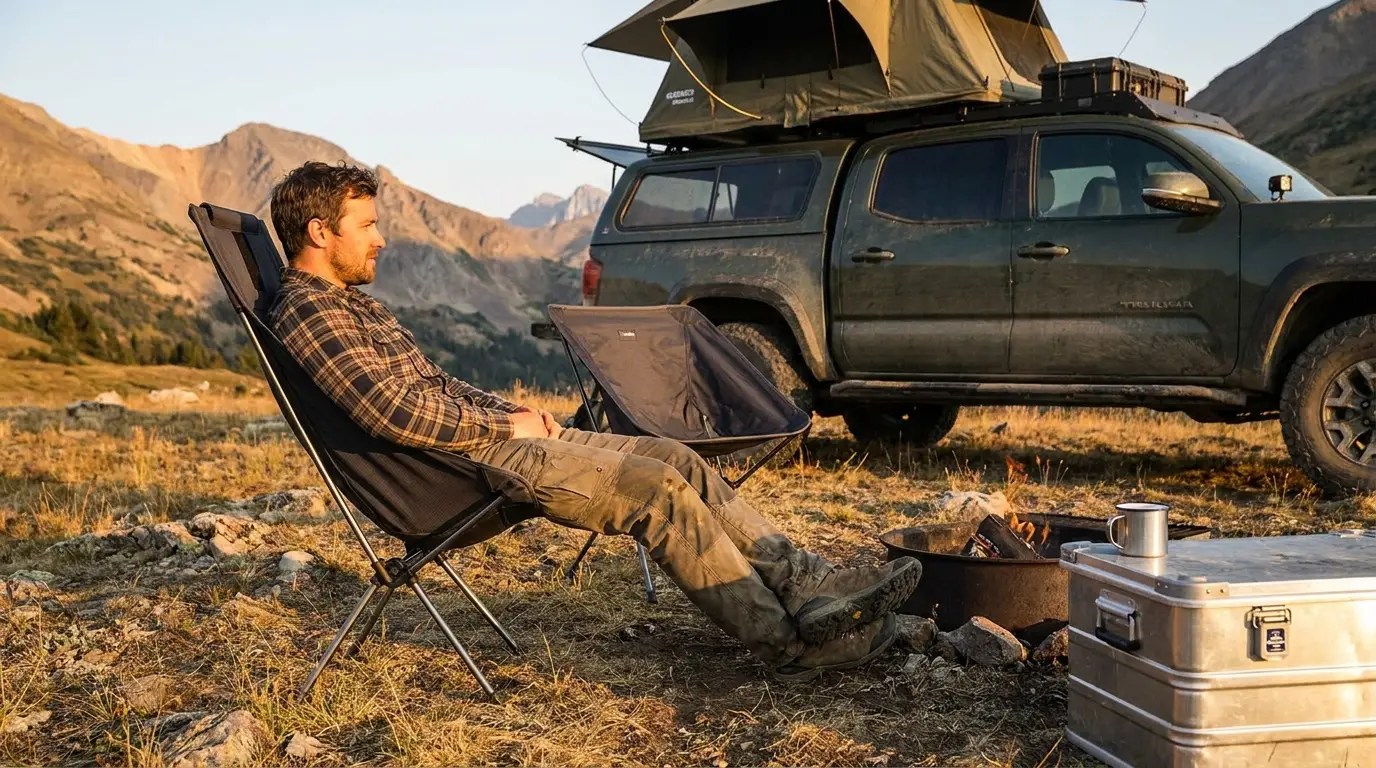
For most of camping history, a chair meant a compromise: comfortable but heavy, light but flimsy, or a reasonably dry log. The CLIQ ClassiQ 2.0 is one of the clearest signs of how far the category has come — roughly 3.5 pounds, folds to the size of a large water bottle, and rated by CLIQ to hold 400 pounds. That's a remarkable amount of chair in a very small package. Here's the honest version of what it does well, what it costs you, and who should skip it.
Portable Seating Is Ancient. Good Portable Seating Isn't.
Folding stools existed thousands of years ago — Roman officials carried the curule chair as a badge of office, and Joseph B. Fenby's Tripolina of the late 1800s put a fabric sling over a folding wood frame for military and camp use. The director's chair, popularized by Gold Medal Camp Furniture at the 1893 Chicago World's Fair, refined the same formula: a collapsible frame, a flexible seat, and a package easier to move than real furniture.
That formula barely changed for a century. The materials did. By the late twentieth century, tubular steel and synthetic fabric gave us the umbrella-style camp chair — cheap, reasonably comfortable, and portable mostly in the sense that it moves from the garage to the truck. At eight to fifteen pounds in a long, awkward bag, it stops being portable the moment you leave the parking lot.
Backpacking chairs fixed the weight with aluminum poles and stretched fabric, getting down to a pound or two. But they traded a weight problem for a setup problem: assemble the poles, seat every section, wrestle the fabric over the last corner, and try not to lose the pieces.
That's the gap the ClassiQ 2.0 aims at: the integrated, no-assembly convenience of an umbrella chair with the packed size of adventure furniture.
What the ClassiQ 2.0 Actually Is
It's one connected mechanism, not a bag of parts. Pull it out, release the retaining strap, and spring-loaded legs unfold from the central hub — CLIQ brands it the MagiQ Hub, with a TelescopiQ frame doing the collapsing. Extend the telescoping arms until the pins click, confirm all six silver locking pins are seated, and sit down.
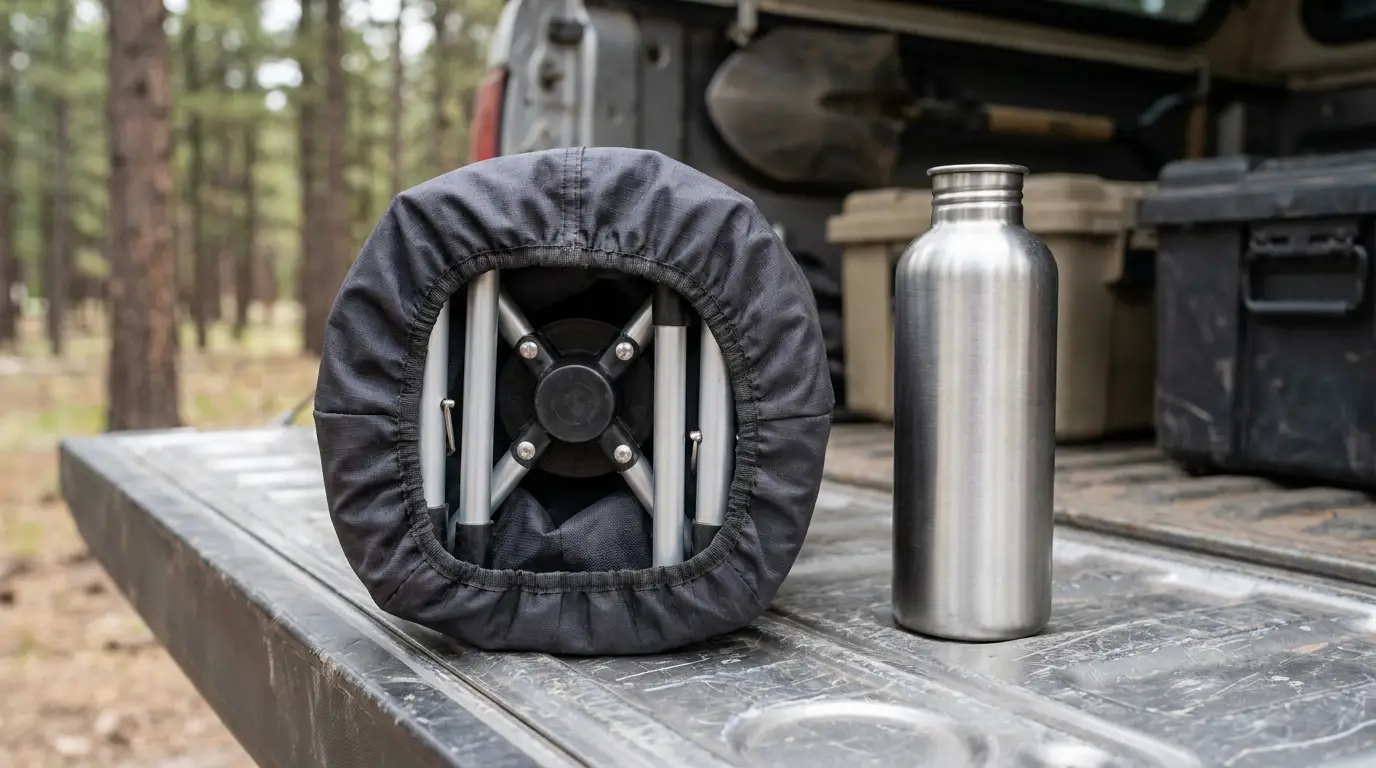
Folded, it measures about 3.4 by 3.4 by 13.5 inches. Open, it becomes a 22-by-22-inch seat roughly 26 inches tall, with a suspended ripstop fabric seat that reclines you slightly. The seat height is 10.5 inches — low and loungy, which matters later. Listed price is US$149.95 with a 45-day return window; specs were pulled from CLIQ's site on July 14, 2026, and Canadian buyers should verify currency, duties, and checkout price.
The Number That Matters: 113 to 1
A 3.53-pound chair rated for 400 pounds is holding more than 113 times its own weight. Two honest caveats. First, that figure is CLIQ's tested claim, not an independent certification — the company says "military-grade strength" but doesn't cite a specific standard on the product page. Second, the original ClassiQ was rated at 300 pounds; an archived REI listing shows the older 3-pound-8-ounce chair with a 140-denier ripstop seat and the lower limit. When you're reading reviews online, check which generation is being discussed, because first-gen feedback doesn't automatically apply to the 2.0.
Independent field testing backs up the stability claim in practice: a 6-foot-3, 260-pound reviewer at Sierra Rec Magazine found it solid on uneven mountain ground, liked the reclined angle, and clocked setup at under 15 seconds once familiar.
Why Packed Size Beats Weight
Here's the part spec sheets undersell: 3.5 pounds isn't remarkable. Plenty of pole-style backpacking chairs weigh half that. What's remarkable is that the ClassiQ collapses into a short, fat cylinder without being taken apart — and a chair that's easy to store is a chair that's actually with you when you need it.
Anyone who's Tetris'd a cargo area knows four long umbrella-chair bags fight with the fridge, the recovery kit, and the action packers for the worst-shaped space in the rig. Four of these tuck into a drawer system like water bottles. That's where the engineering stops being a party trick:
- Overlanding storage: four chairs in the space one umbrella chair bag used to eat.
- Permanent rig residents: small enough to live in the vehicle year-round as emergency seating.
- Beach, festivals, sidelines: hangs off a daypack or drops in a tote when your hands are already full.
- Travel: fits in a suitcase — a camp chair that flies is a genuinely new category.
The Trade-Offs, Honestly
No chair is free of compromise, and extreme compactness buys its convenience with real currency.
- The price is premium. US$149.95 is several times a basic umbrella chair. If you camp once a year and have a big trunk, the cheap chair is still the better value.
- It sits low. The 10.5-inch seat height is great at the beach and rough on anyone who struggles to rise from a low position. Taller campers who want an upright dining posture should look elsewhere.
- No real armrests, no cupholder. The support arms are structure, not padded rests, and the current product page lists no cupholder.
- Compact, not ultralight. 3.53 pounds is fine for a short hike, heavy for a long-distance pack. Sierra Rec's reviewer reached the same verdict: permanent spot in the truck, no spot in the ultralight kit.
- More moving parts. A hub, telescoping sections, and six pins are more mechanical interfaces than a scissor frame. Keep sand and grit out of the joints and verify the pins are locked before you load it.
- Small feet sink. Like most compact chairs, narrow contact points punch into soft sand and mud. The 400-pound rating assumes a stable surface, not a swamp.
On durability: CLIQ's site showed nearly 6,000 customer reviews at research time, 74% five-star — manufacturer-hosted, so salt accordingly. One long-term owner reported the rubber feet falling off after several years, a useful reminder that wear items matter. The advertised "limited lifetime" coverage is really the CLIQ Life Guarantee: a US$45 repair-or-replace program, not free-forever warranty service. Read the terms before you buy, especially from Canada.
So — How Far Have Camping Chairs Come?
The ClassiQ 2.0 isn't revolutionary because it invented portable seating; folding chairs have travelled with people for millennia. Its achievement is integration. The ancient stool was portable but punishing. The director's chair was comfortable but bulky. The umbrella chair was affordable but a pain to haul. The backpacking chair was tiny but fiddly. This thing folds several of those advances into one object that opens in fifteen seconds and disappears into a drawer when the trip moves on.
Best for: overlanders fighting for cargo space, car campers hauling seats for four, van and RV travellers, beach and sideline parents, photographers waiting on light, and anyone who wants permanent emergency seating in the rig. Skip it if: you're counting grams on a thru-hike, you need a tall upright seat with solid armrests, or a $40 chair and an empty trunk already cover your camping year.
Chairs used to be the thing we reluctantly carried to camp. The good ones are now the thing we barely notice we packed — and that, more than any single spec, is how far camping chairs have come.
Quick Answers
How much does the CLIQ ClassiQ 2.0 weigh and how small does it fold?
CLIQ lists the ClassiQ 2.0 at 3.53 pounds (1.6 kg), folding down to roughly 3.4 by 3.4 by 13.5 inches — about the size of a large water bottle. Opened, it expands to a full 22-by-22-inch seat about 26 inches tall.
What is the ClassiQ 2.0's weight capacity?
CLIQ rates the ClassiQ 2.0 at 400 pounds, up from the 300-pound rating on the original ClassiQ. That is a manufacturer's tested claim rather than an independent certification, and older reviews of the first-generation chair should not be applied to the 2.0.
Is the ClassiQ 2.0 good for backpacking?
It is compact, but at 3.53 pounds it is heavy for an ultralight backpacking kit — dedicated pole-style backpacking chairs can weigh a pound or two. Where it shines is car camping, overlanding, beach days, festivals, and living permanently in a rig or drawer system.
How do you set up the ClassiQ 2.0?
Pull it from its bag, release the retaining strap, let the spring-loaded legs unfold, then extend the telescoping arms until the pins click. CLIQ says to confirm all six silver locking pins are engaged before sitting. With practice, setup takes under 15 seconds.
What are the ClassiQ 2.0's main drawbacks?
The listed US$149.95 price is several times that of a basic umbrella chair, the 10.5-inch seat height is low for anyone who struggles to rise from a low position, there are no conventional armrests or cupholder, and the hub and locking pins are moving parts you need to keep free of sand and grit.
Trusted Sources
Specs and pricing pulled from CLIQ's US site July 14, 2026 and may change. Manufacturer capacity claims are the maker's own figures — check the current listing and warranty terms before buying, especially from Canada.
Your Rig Belongs on This Page
Drop your best shots and the story of your build. Every week we feature community rigs — free, always.
Trekkr.life shares field notes from the overlanding community for general information only. Gear opinions are our own and never sponsored — we bought nothing with strings attached and nobody paid for this page. Weight-capacity figures are manufacturer claims; verify current specs, pricing, and warranty terms with the seller before purchase, and always check that locking hardware is fully engaged before using any folding chair.