Quick Answer
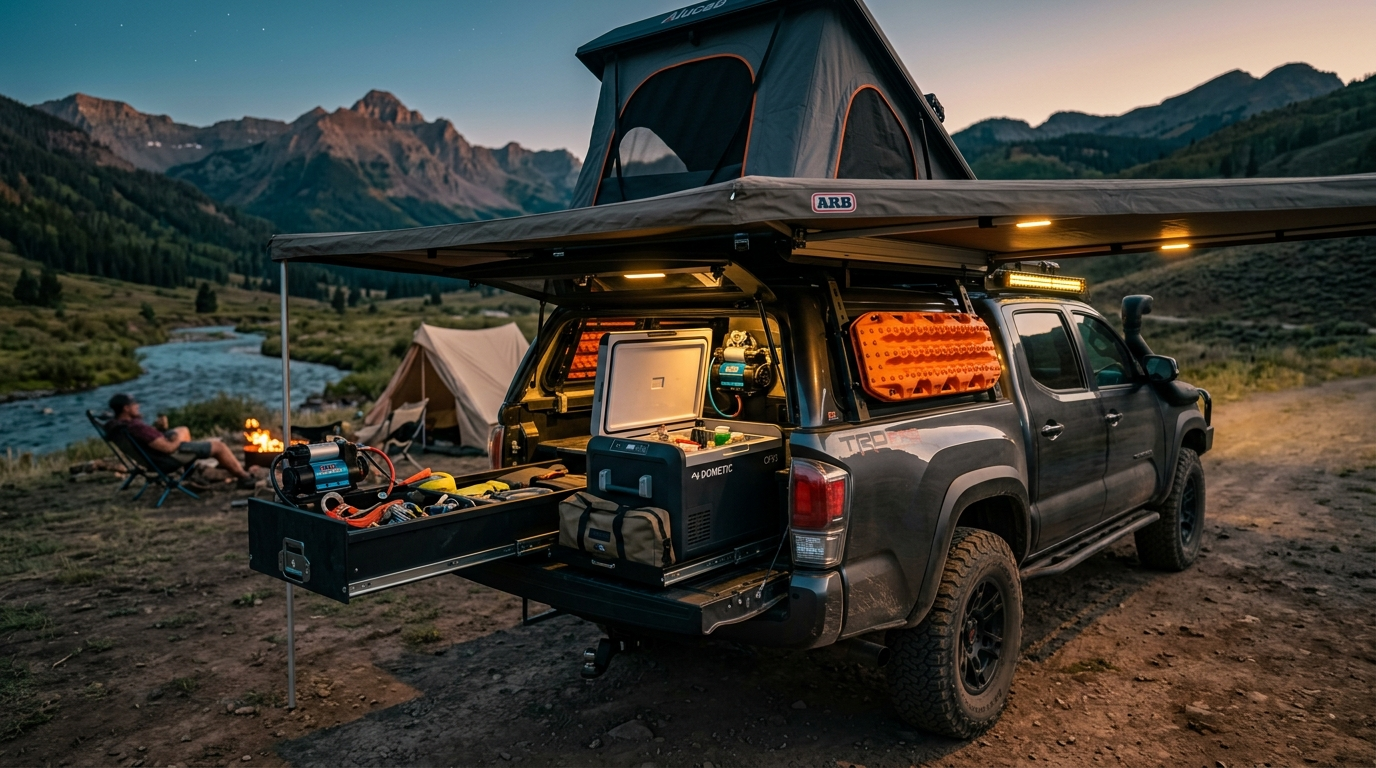
Worth it: all-terrain tires, recovery boards, air compressor, deflators, a 12V fridge, lithium power, load-matched suspension, an awning, a diesel heater, satellite comms, proper water storage, and camp lighting. Skip for now: snorkels, extra light bars, heavy bumpers without a winch plan, cheap winches, full armour, impulse rooftop tents, MOLLE everything, and exhaust mods. Build order: traction, then independence, then capability, then comfort.
Walk any overland expo and you will leave convinced your rig is naked without $30,000 in bolt-ons. The truth from people who actually sleep on trails: a handful of upgrades transform your capability, and the rest mostly transform your bank balance. Here is the honest split — twelve that earn their keep on Alberta and BC backroads, and eight you can happily skip until the trail itself tells you otherwise.
The 12 Worth Every Dollar
- Quality all-terrain tires. The single biggest capability jump you can buy. Nothing else on this list matters if your tires can’t bite gravel, mud, and sharp shale.
- Recovery boards. Fifty percent of stuck situations end in ten minutes with a set of boards and a shovel. No winch required, no second vehicle required.
- A 12V air compressor. Airing down to 20 psi transforms ride and traction; airing back up at the trailhead is non-negotiable. Buy a good one once.
- Tire deflators and a real gauge. Twenty dollars of kit that makes the compressor useful. The cheapest meaningful upgrade in overlanding.
- A 12V fridge. The upgrade nobody regrets. Ice logistics quietly ruin trips; a fridge deletes the problem forever.
- Dual battery or power station. Whatever runs your fridge at 2 a.m. without stranding you. Pick lithium; size it before you buy (our solar guide covers the math).
- Load-matched suspension. Not a lift for looks — springs and shocks rated for the weight you actually carry. Fixes the sag, the sway, and the crash-through.
- A quality awning. Shade at lunch, dry cooking in rain, instant camp. Used every single trip, which is more than most gear can say.
- Diesel or gasoline air heater. Extends your season by three months in Alberta. Shoulder-season camping goes from survival to luxury.
- Satellite communicator. An inReach-class device is the cheapest life insurance on this list. Zero bars is the norm out there.
- Water storage done properly. A rigid tank or jerry system with a tap. Ten litres per person per day changes how long you can stay out.
- Scene and camp lighting. Small amber pods and a dimmable strip under the awning — not for the road, for the camp. Cheap, transformative after dark.
The 8 You Can Skip (For Now)
- A snorkel — unless you regularly ford doors-deep water, it’s a dust tube with a rugged aesthetic.
- The fourth light bar. One good driving light setup, aimed correctly, beats a light show that blinds oncoming trucks on the Trunk Road.
- Heavy steel bumpers without a mission. They cost payload, fuel, and front-end geometry. Buy them when you buy the winch and the animal-strike risk, not before.
- A cheap winch. Worse than no winch: it teaches you to attempt things it will fail at. Save until you can buy quality, and learn boards first.
- Full underbody armour for gravel trips. A factory skid set handles forestry roads fine. Armour when the rocks demand it.
- Impulse rooftop tents. The $1,200 special that delaminates in year two. Sleep in the truck, save, then buy once. (Or buy a good used one on the Trekkr Marketplace — overlanders sell great gear cheap.)
- MOLLE panels on every surface. Organization is a habit, not a bolt-on. A $40 set of bins out-organizes $600 of tactical panels.
- Exhaust and intake “power” mods. Your truck needs torque at 8 km/h, not a soundtrack. Spend it on tires.
The Order of Operations
If you are building from stock, this sequence never fails: tires → boards + compressor → fridge + power → suspension → comfort. Each stage makes the next one more useful, and you can run real trips after stage one. The rigs that impress people at the trailhead are rarely the ones that finish the Ghost with no drama — be the second kind.
| Stage | Upgrades | Ballpark (CAD) |
|---|---|---|
| 1. Traction | AT tires, deflators, compressor, boards | $1,800–$2,800 |
| 2. Independence | Fridge, power station or dual battery | $1,500–$3,500 |
| 3. Capability | Load-matched suspension, comms | $2,000–$4,000 |
| 4. Comfort | Awning, heater, lighting, water | $1,200–$3,000 |
Frequently Asked Questions
What is the first upgrade I should buy for overlanding?
All-terrain tires, followed immediately by recovery boards and an air compressor. That trio delivers more real-world capability than any other $3,000 you can spend on a rig.
Do I need a winch for overlanding in Alberta?
Not at first. Recovery boards, a shovel, and airing down solve most solo stucks on Alberta trails. Add a quality winch when you start running harder routes like the Ghost or Hummingbird alone.
Is a rooftop tent worth the money?
A quality one, yes — fast setup and great sleep. A cheap one, no. If budget is tight, a used premium tent from another overlander beats a new budget tent every time.
How much does it cost to build an overland rig?
A genuinely capable setup runs $6,000–$13,000 CAD on top of the vehicle, spread across traction, power, suspension, and comfort. Spending more is easy; needing more is rare.
Gear up for the next one.
Rigs, trailers, tents, and trail-proven gear from the Trekkr community. Direct from seller, no commission.
Browse the Marketplace